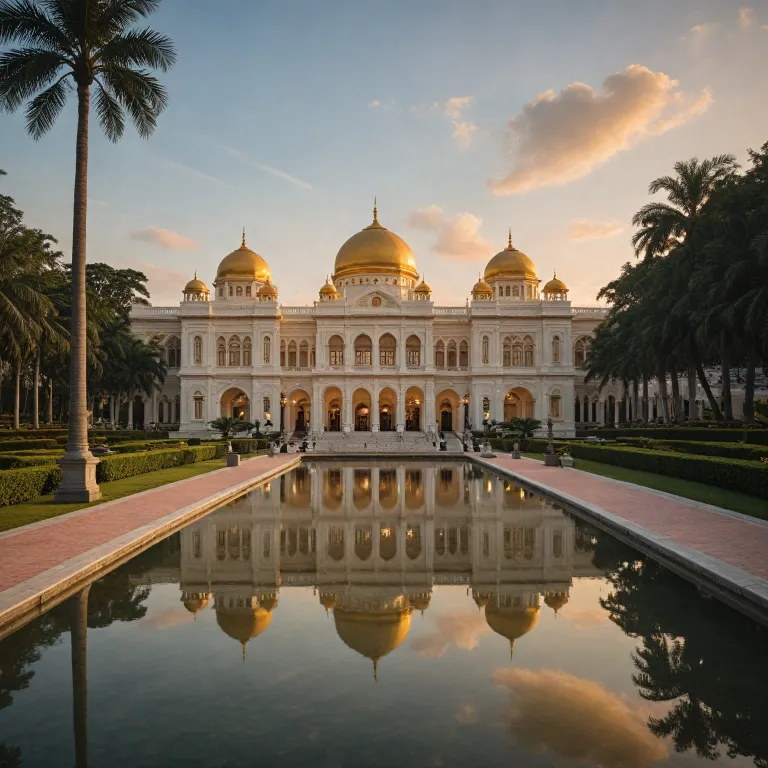
Royal grandeur at istana negara Brunei Darussalam for discerning travellers
The phrase istana negara Brunei Darussalam immediately evokes images of immense royal splendour. For travellers planning a premium stay in Brunei, understanding this palace and its role in national life will shape every visit. The royal palace experience also subtly influences how guests evaluate luxury hotels in Bandar Seri Begawan.
In Brunei Darussalam, the term istana refers not just to a building but to a living symbol of the state and its monarchy. The most famous istana is Istana Nurul Iman, often described as the largest palace residence in the world. This royal palace is the official home of Sultan Hassanal Bolkiah and the central stage for many state visit ceremonies.
Located on the banks of the Brunei River near Bandar Seri Begawan, the palace anchors the capital’s high end hospitality landscape. Luxury travellers who book suites overlooking the river often choose properties that frame views towards the istana and the surrounding park areas. From these vantage points, the contrast between serene greenery and monumental architecture becomes part of the stay.
The palace complex is closely linked to the identity of Brunei as a modern Islamic monarchy. Within its walls, the Sultan, the royal family, and the minister office conduct key affairs of state. For visitors, even a distant view of the istana during a city tour adds context to every mosque, museum, and premium hotel they encounter.
Architecture, history, and how they shape luxury expectations
Istana Nurul Iman stands at the heart of negara Brunei as a showcase of architectural ambition. Designed by Leandro V. Locsin and completed with interiors by Khuan Chew, the istana blends Islamic domes with Malay motifs and contemporary lines. This fusion has quietly set a benchmark for how many guests judge design quality in luxury hotels across Bandar Seri Begawan.
The palace’s total floor area exceeds 200 000 square metres, reinforcing its reputation as the largest palace residence. With 1 788 rooms, 257 bathrooms, and a banquet hall for 5 000 guests, it embodies scale that few royal palace complexes can match. Even the private mosque inside, accommodating 1 500 worshippers, influences how travellers perceive nearby mosque architecture such as Omar Ali Saifuddien.
For premium hotel booking platforms in Brunei, this context matters when curating properties around Bandar Seri Begawan. Guests who read about the istana and the royal state ceremonies often expect similarly meticulous service standards. Articles such as the guide to elevating your stay with refined online luxury hotel booking in Brunei help align those expectations with reality.
The palace’s construction during Brunei’s transition to full sovereignty also shaped the nation’s hospitality culture. As the Sultan and the prime minister host each state visit within the istana, visiting delegations often stay in the finest hotels in Bandar Seri Begawan. This tradition encourages local properties to refine suites, club lounges, and minister office style meeting rooms to royal standards.
Planning a visit around istana Nurul Iman and nearby landmarks
Most travellers cannot enter the istana except during the three days of Eid al Fitr, when the palace opens for a rare public visit. During this period, guests may greet the Sultan, members of the royal family, and dignitaries such as Pengiran Anak and Raja Isteri. For many, this encounter becomes the emotional highlight of their stay in Brunei Darussalam.
Outside those days, visitors usually admire the royal palace from Persiaran Damuan park or by boat along the Brunei River. From the park, framed views of the istana domes and the surrounding seri landscape create memorable photo opportunities. River cruises often combine perspectives of the palace, the water village, and the skyline of Bandar Seri Begawan.
Luxury travellers frequently pair these views with private guided tours of Omar Ali Saifuddien mosque in the bandar centre. This mosque, with its marble surfaces and reflective lagoon, complements the golden domes of Istana Nurul Iman. Together, they illustrate how the state balances spiritual life, royal protocol, and modern governance.
High end hotel concierges in bandar seri districts can arrange timed itineraries that weave palace viewpoints with museum visits. Stops may include the Brunei history centre, where exhibits explain the lineage of Sultan Brunei rulers and the evolution of the state. Such context deepens appreciation of why the istana remains central to national identity and to the guest experience.
How royal protocol influences luxury and premium hotel choices
The daily rhythm of life at Istana Nurul Iman subtly shapes expectations for luxury accommodation in begawan Brunei. When the Sultan Hassanal Bolkiah hosts a state visit, the protocol teams coordinate closely with leading hotels. Suites, meeting rooms, and security arrangements must align with standards set inside the palace itself.
Travellers using premium booking platforms for Brunei quickly notice references to royal events and state functions. Properties near the minister office and key government buildings highlight their experience hosting delegations linked to the istana. This association reassures guests that service teams understand ceremonial timing, privacy, and the nuances of royal etiquette.
Within the palace, the Sultan, the prime minister, and senior ministers conduct audiences that influence national policy. The presence of the minister office and other state departments inside or near the istana reinforces its role as both home and office. Luxury hotels mirror this duality by offering spaces that feel residential yet suitable for high level meetings.
Many travellers also appreciate how Brunei’s royal traditions respect family roles such as Isteri Pengiran and Raja Isteri. These titles, visible during public ceremonies at the royal palace, highlight the importance of hospitality within the royal household. Premium hotels often translate this into thoughtful touches for multi generational families, from connecting suites to quiet prayer rooms.
Design cues from the largest palace and their echo in hotels
Istana Nurul Iman’s design vocabulary extends far beyond its gates into the wider bandar seri hospitality scene. The palace’s use of Italian marble, English glass, and rich textiles has inspired many hotel lobbies and suites. Guests often sense this connection when they notice similar materials and colour palettes in Brunei’s premium properties.
The mosque within the istana, with capacity for 1 500 people, also influences how hotels design prayer spaces. Even smaller properties in Bandar Seri Begawan aim for serene, well oriented rooms that respect the state’s Islamic character. This alignment between royal and commercial spaces reassures guests seeking both comfort and spiritual convenience.
Outdoor areas around the palace, including manicured park zones and riverfront terraces, inform how resorts plan their grounds. Designers frequently reference the seri landscape concept, blending structured gardens with natural river views. For travellers, this means that a stay near the Brunei River can echo the calm atmosphere surrounding the royal palace.
Inside the istana, stables for 200 horses, garages for 110 cars, and multiple swimming pools demonstrate a lifestyle of scale. While hotels cannot replicate such numbers, they translate the idea into generous spa facilities, valet services, and resort style pools. In this way, the largest palace in the world quietly sets the tone for what luxury means in Brunei Darussalam.
Practical tips for aligning your stay with Brunei’s royal heritage
When planning a visit focused on istana negara Brunei Darussalam, timing is crucial for meaningful experiences. Travellers who wish to enter Istana Nurul Iman itself should align their trip with Eid al Fitr. During those days, the palace is open to the public only during the annual Islamic celebration of Eid-ul-Fitr for three days.
Outside that window, guests can still build itineraries that highlight the royal and state narrative. A typical day might start with sunrise views over the Brunei River, followed by a guided tour of Omar Ali Saifuddien mosque. Afternoon stops could include the Brunei history centre and other museum spaces that explain the role of Sultan Hassanal and previous rulers.
For accommodation, consider hotels in Bandar Seri Begawan that offer river facing rooms and easy access to Persiaran Damuan park. These locations make it simple to photograph the istana at different times of day and to join river cruises. Many premium properties also provide transport to government districts, the minister office area, and key royal event venues.
Travellers interested in protocol may ask concierges about past state visit arrangements involving Sultan Brunei and foreign leaders. Such stories often reveal how closely hotels work with the royal palace during major events. Understanding this collaboration helps guests appreciate why service culture in Brunei’s luxury segment feels both formal and genuinely warm.
Key statistics about Istana Nurul Iman and its role in Brunei
- The total floor area of Istana Nurul Iman is approximately 200 000 square metres, underscoring its status as the largest residential palace in the world.
- The palace contains around 1 788 rooms and 257 bathrooms, allowing it to host extensive royal, state, and guest functions simultaneously.
- The main banquet hall can accommodate about 5 000 guests, supporting large scale celebrations, royal receptions, and state visit banquets.
- The mosque within the istana has capacity for roughly 1 500 worshippers, reflecting the central role of Islam in Brunei’s royal and civic life.
- The complex includes five swimming pools, garages for about 110 cars, and stables for around 200 horses, illustrating the breadth of facilities required for the Sultan’s household.
Frequently asked questions about istana negara Brunei Darussalam
What is the significance of Istana Nurul Iman for travellers?
Istana Nurul Iman serves as the official residence of the Sultan of Brunei and the seat of the Brunei government, symbolizing the nation's cultural heritage and architectural grandeur. For travellers, this means the palace is both a visual landmark and a reference point for understanding Brunei’s political and spiritual life. Its presence shapes city tours, river cruises, and even the positioning of many luxury hotels in Bandar Seri Begawan.
Can the public visit the palace during a trip to Brunei?
The palace is open to the public only during the annual Islamic celebration of Eid-ul-Fitr for three days, allowing visitors to meet the Sultan and his family. Outside this period, travellers can still enjoy views of the istana from Persiaran Damuan park or from boats on the Brunei River. Many premium hotels and tour operators in Brunei Darussalam offer packages that coordinate these viewpoints with other cultural highlights.
Who designed Istana Nurul Iman and why does it matter for hotel guests?
The palace was designed by Filipino architect Leandro V. Locsin, with interior design by Khuan Chew. Their work combines Islamic and Malay elements with contemporary luxury, influencing how many high end properties in Bandar Seri Begawan approach architecture and interiors. Guests who appreciate thoughtful design will often recognise echoes of the istana’s style in the city’s most refined hotels.