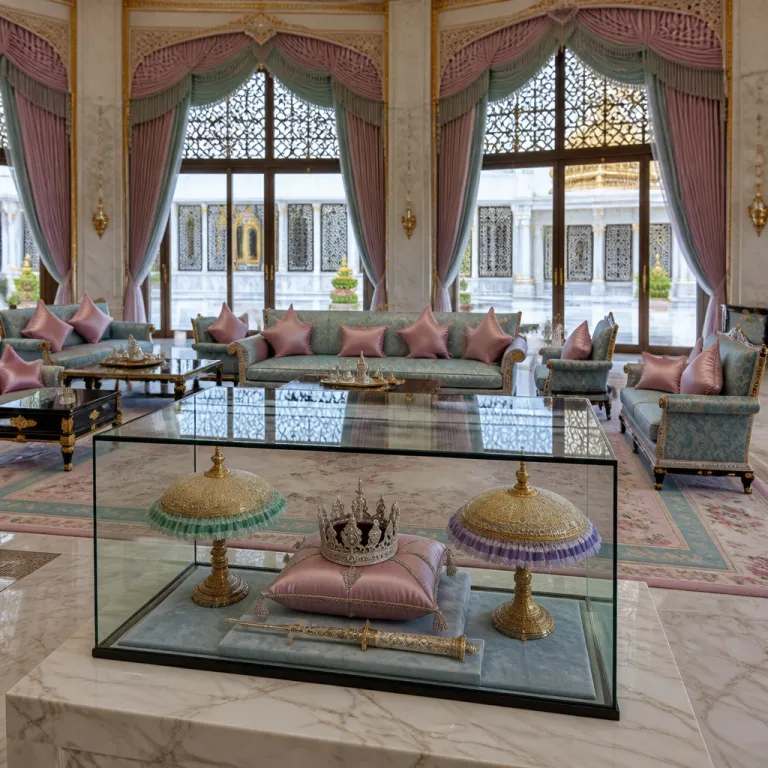
Royal regalia as the key to understanding Brunei’s hospitality
The brunei royal regalia palace theme is not about a single building, but about how a small country stages power with quiet confidence. Inside the Royal Regalia Museum in Bandar Seri Begawan, the royal regalia collection shows how the sultan’s public image is choreographed through thrones, chariots and ceremonial uniforms. For luxury travelers, this museum in Brunei is the clearest lens on why service here feels both formal and deeply personal.
Walk into the main hall and the first impression is golden light glinting off polished metal and mirrored floors. The royal chariot used for the current Sultan’s coronation anchors the space, surrounded by regalia that narrates decades of statecraft in Brunei Darussalam. Each display case in this regalia museum explains how royal protocol shapes everything from palace audiences to how a hotel butler addresses you during a stay in the capital.
Many visitors rush through the museum Brunei circuit in a single day, but couples interested in culture should slow down. Take time to read how the Malay Islamic Monarchy philosophy, known locally as MIB, is woven into every royal ceremony and every item of regalia on display. When you later check into a luxury hotel in Bandar Seri Begawan, you will recognise echoes of this royal regalia language in the way staff present welcome towels, tea trays and even your room key.
The brunei royal regalia palace narrative also helps explain why hierarchy feels gentle rather than rigid here. The sultan is presented as both distant and accessible, with exhibits showing gifts from other Southeast Asia leaders and from ordinary citizens of the kampong communities. That duality filters into hospitality, where a general manager might bow with palace style formality, then chat about the best water village views from your suite balcony.
For couples planning travel around culture, this museum in Bandar Seri Begawan is a natural first stop. You can visit in the morning, then cross the road to a café for kopi and watch how civil servants, imams and hotel staff move through their own daily rituals. By the time you reach your evening check in, the brunei royal regalia palace story will already be shaping how you read every gesture of welcome.
Istana Nurul Iman and the scale of royal imagination
Across the river from Bandar Seri Begawan’s compact centre, Istana Nurul Iman stretches along the jungle edge like a mirage. This istana Nurul Iman palace is the official residence of the Sultan of Brunei, and its scale quietly defines what “grand” means in this country. You cannot stay here, but every luxury hotel in Brunei Darussalam measures itself against the palace’s blend of royal ceremony and private calm.
Seen from the water, the palace domes and arches echo the golden forms of the Omar Ali Saifuddien Mosque in the city centre. Both the mosque and Istana Nurul Iman sit at the heart of Brunei royal identity, linking spiritual authority with temporal power in a way that shapes how hosts think about guests. When a concierge arranges a private boat ride past the palace, they are not just booking a cruise ; they are curating your encounter with the national imagination.
On certain religious occasions, parts of Istana Nurul Iman open to the public, and queues of residents from every kampong and village form along the approach roads. Couples who time their travel to coincide with these audiences can experience a rare moment when royal protocol and everyday Bruneian warmth meet. The etiquette is simple but strict ; dress modestly, move with the crowd, and don’t forget that this is a working royal residence, not a theme park.
Even if your visit does not align with palace openings, the presence of Istana Nurul Iman shapes the city’s rhythm. Boatmen in Kampong Ayer, the historic water village, point out the palace with quiet pride as they skim across the water towards the stilt houses. Many of them have relatives who work in palace service, and their stories about catering, security and ceremony give texture to the brunei royal regalia palace narrative you saw earlier in the museum.
Families planning heritage focused itineraries can pair a river cruise past Istana Nurul Iman with structured walks around the city’s royal sites. For a deeper dive into how children respond to these spaces, the guide to royal Brunei for families and heritage walks offers practical routes that still feel intimate. Couples can borrow the same logic, using palace views as anchor points for slow, reflective days that end back at a riverside hotel bar.
Mosques, ceremony and the architecture of welcome
To understand how royal values filter into hospitality, you need to stand between two mosques. In Bandar Seri Begawan, the Omar Ali Saifuddien Mosque and the Jame’ Asr Hassanil Bolkiah Mosque form a spiritual axis that complements the brunei royal regalia palace story. Both buildings are active places of worship, but they also function as architectural manifestos for how the sultanate sees itself.
The Omar Ali Saifuddien Mosque rises above an artificial lagoon, its golden dome reflecting in still water that mirrors the calm tone of the country. Nearby luxury hotels often orient suites and club lounges towards this view, knowing that couples value the serenity of the mosque at sunset. When you visit, dress modestly, move slowly, and let the rhythm of call to prayer reset the pace of your travel day.
Further out, the Jame’ Asr Hassanil Bolkiah Mosque, often shortened locally to Asr Hassanil, feels more expansive, with multiple domes and manicured gardens. Its scale echoes the ambition of Istana Nurul Iman, while its detailing recalls motifs from the Royal Regalia Museum and other museum Brunei collections. Many high end properties in Gadong and Kiulap subtly reference these patterns in carpets, screens and lobby lighting, creating a quiet dialogue between mosque and hotel.
Evening is when this dialogue becomes most visible. After late prayers, couples can head towards the Gadong night market, where the scent of grilled satay and smoky noodles cuts through the humid air. A driver arranged by your hotel will usually know the best stalls, and the route back often passes illuminated domes that tie the night market energy back to the royal and religious core.
For those planning stays during the wetter months, the interplay between rain, mosque domes and river water can be especially atmospheric. Our guide to Brunei in the monsoon for luxury travelers explains why quieter hotel pools and softer light make mosque visits even more compelling. In every season, these sacred spaces remind you that the brunei royal regalia palace narrative is inseparable from the country’s Islamic heartbeat.
Kampong Ayer, water villages and the everyday royal connection
From the riverfront near Bandar Seri Begawan’s central mosque, wooden jetties lead to speedboats that serve as water taxis. Within minutes you are skimming across the water towards Kampong Ayer, the historic water village that has housed generations of Bruneians. This is where the brunei royal regalia palace story meets lived reality, in a maze of timber walkways, schools and mosques raised above the river.
Kampong Ayer is often described as the “Venice of Southeast Asia”, but the comparison misses the point. Here, the relationship between the sultan and the village is not just symbolic ; state funded services, from clinics to police posts, show how royal responsibility is understood in Brunei Darussalam. When you visit with a thoughtful guide, you see how the same values that shape palace ceremony also govern how rubbish is collected and how fire safety drills are run.
Many residents of this water village work in government or in the hospitality sector, commuting daily to hotels in Bandar Seri Begawan and back across the water at night. Their stories about training sessions that reference royal protocol, or about catering for palace events, give texture to the brunei royal regalia palace narrative. Couples who stay in riverside properties can often arrange private Kampong Ayer tours that end with tea in a family home, a gesture of welcome that feels as formal as any palace reception.
Look closely at the small surau and local mosques scattered through Kampong Ayer. Their domes and minarets echo the larger forms of the Omar Ali Saifuddien Mosque and the Jame’ Asr Hassanil Bolkiah Mosque, creating a visual thread from village to capital. This repetition of motifs, from golden crescents to patterned tiles, mirrors how hotel designers borrow royal and religious symbols to create a sense of place in lobbies and suites.
After a day on the water, returning to your hotel jetty feels different. The polished marble and chilled towels now carry the memory of timber planks and river spray, and the line between royal formality and kampong warmth blurs. For a slower interlude between excursions, consider an afternoon mapped around the city’s cafés and kopi stalls, using our guide to Bruneian coffee rituals as a companion to your own reflections on water, village life and royal hospitality.
Reading service, ceremony and luxury through a royal lens
Once you have walked through the Royal Regalia Museum, cruised past Istana Nurul Iman and wandered Kampong Ayer, hotel service in Brunei starts to read differently. The brunei royal regalia palace narrative is no longer abstract ; it is present in how staff greet you, how flags are arranged in lobbies and how prayer times are quietly accommodated. Couples who tune into these cues often find their stay deepens from comfortable to genuinely meaningful.
In top tier properties around Bandar Seri Begawan and Gadong, general managers often have backgrounds that intersect with royal events, whether through catering, protocol or logistics. They understand that in this country, the sultan’s example of generosity and discretion sets the tone for what luxury should feel like. That is why turn down service might include dates during Ramadan, or why a concierge will adjust an itinerary so you can attend evening prayers at the Omar Ali Saifuddien Mosque or the Jame’ Asr Hassanil Bolkiah Mosque.
Reading the difference between spectacle and genuine cultural access is essential. A hotel that simply decorates with golden domes and framed photos of the sultan is offering surface level royal imagery, while one that trains staff in Malay Islamic Monarchy values is inviting you into a deeper conversation. Ask how the property engages with museum Brunei institutions, whether it supports conservation work in Kampong Ayer, and how it handles guest visits to the Royal Regalia Museum and other royal sites.
Night reveals another layer of this hospitality. From certain riverfront suites, you can see the glow of domes, the faint outline of Istana Nurul Iman and the scattered lights of the water village, while the Gadong night market hums in the distance. Planning an evening that moves from market to mosque view to hotel bar allows you to feel how the brunei royal regalia palace story continues after dark, in small gestures of care and choreography.
For couples mapping a first trip to Brunei Darussalam, the most rewarding itineraries weave royal, religious and everyday experiences into a single arc. Start with the regalia museum, layer in mosques and Kampong Ayer, then choose a hotel that understands this ecosystem rather than standing apart from it. In doing so, you align your own travel story with a sultanate where royal ceremony is not a museum piece, but a living script for how guests are welcomed and honoured.
FAQ
Is the Royal Regalia Museum in Bandar Seri Begawan worth visiting for luxury travelers ?
Yes, the Royal Regalia Museum is essential if you care about context. Its collection of regalia, thrones and ceremonial items explains how royal protocol shapes service culture in Brunei’s top hotels. A visit early in your stay helps you read later experiences at mosques, palaces and riverside properties with far more nuance.
Can visitors enter Istana Nurul Iman, the sultan’s palace in Brunei Darussalam ?
Istana Nurul Iman is primarily a working royal residence and administrative centre, so it is not open for casual visits. On specific religious occasions, parts of the palace open to the public, and residents queue to pay their respects to the sultan. Outside those times, most travelers experience the palace from the river during boat cruises arranged through their hotel.
How should couples dress when visiting mosques and royal related sites in Brunei ?
Modest clothing is expected at mosques, the Royal Regalia Museum and other royal linked spaces. Shoulders and knees should be covered, and women may be asked to wear a headscarf or robe provided on site. In luxury hotels, dress codes are more relaxed, but aligning your outfits with local norms shows respect for the country’s Malay Islamic Monarchy values.
What is the best area to stay in for exploring Brunei’s royal and Islamic heritage ?
Bandar Seri Begawan is the most convenient base, as it places you close to the Royal Regalia Museum, the Omar Ali Saifuddien Mosque and boat jetties for Kampong Ayer. High end properties in the city and nearby Gadong offer easy access to these sites while providing resort style comfort. From here, hotel concierges can arrange private tours that connect palaces, mosques and the water village in a single, coherent itinerary.
Is Kampong Ayer safe and suitable for a romantic day trip ?
Kampong Ayer is generally safe when visited with licensed boatmen or guides recommended by reputable hotels. Walkways can be uneven, so sensible footwear is important, but the atmosphere is welcoming and unhurried. Many couples find that a slow afternoon in the water village, followed by sunset views of the city’s mosques, becomes one of the most memorable parts of their stay.