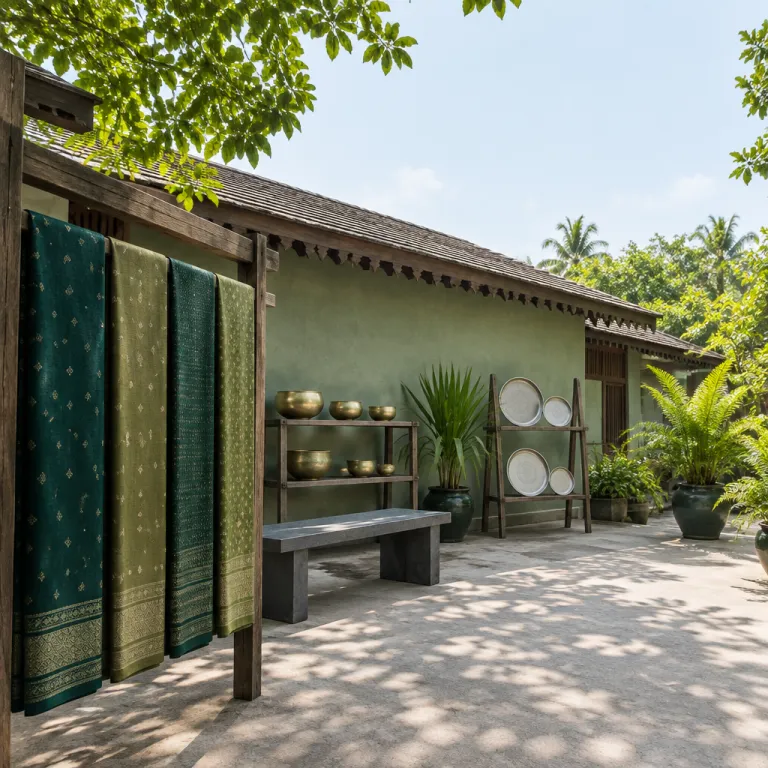
Why brunei traditional crafts songket belong on a luxury itinerary
Songket in Brunei is not a museum relic; it is a living traditional art that still signals social status at palace ceremonies and family celebrations. In a country where gold domes dominate the skyline, the quiet shimmer of gold thread in a length of woven cloth tells you far more about brunei today and how cultural heritage is carried through the hands of makers. For the luxury traveler, building a day around brunei traditional crafts songket, silverwork and brassware turns a hotel stay into a textured encounter with the sultanate’s soul.
Songket is a form of cloth weaving where silk or cotton kain is densely patterned with supplementary gold and sometimes gold silver metallic thread, creating raised motifs that feel almost sculpted. In Brunei Darussalam, this weaving process is shaped by malay court aesthetics, indonesian and wider southeast Asia trade histories, and the specific tastes of the royal household, so designs survived that you will not see in neighboring countries. When you stand beside a loom and watch the making of a single panel of woven cloth, the pace of brunei arts suddenly matches the unhurried rhythm of the mangroves and the call to prayer drifting over Kampong Ayer.
For guests booking premium suites in central Bandar Seri Begawan, the most rewarding cultural arts experiences now sit within a short drive or water taxi ride. Several hotels quietly arrange private visits to arts handicrafts centers where weaving Brunei masters, silver chasers and brass casters work in studios that feel more like ateliers than classrooms. Ask your concierge to prioritize workshops where handicrafts training is ongoing, because your presence supports the steps preserve intangible cultural skills rather than just the sale of a souvenir.
Inside the loom room: how Bruneian songket is made and worn
Walk into a dedicated songket studio and the first sensation is sound, not color; the soft clack of wooden frames and the whisper of thread sliding through fingers mark each stage of the weaving process. A single length of kain can take weeks of making, as the weaver counts each warp and weft to place the supplementary gold or silver thread that will become the pattern you see shimmering across the finished woven cloth. This is where brunei traditional crafts songket stops being an abstract cultural heritage term and becomes a precise choreography of hands, eyes and memory.
Bruneian songket belongs firmly to the malay world, yet its designs survived in ways that reflect the sultanate’s own courtly codes and social status markers. Certain motifs and color combinations are traditionally reserved for royal or national occasions, while more contemporary design experiments appear in pieces commissioned for weddings or for brunei today urban professionals who still choose traditional cloth for major life events. When you see a family arrive at a hotel lobby in coordinated songket outfits, you are witnessing intangible cultural continuity, not a costume performance for visitors.
Many high end hotels now work with nearby arts handicrafts centers to offer structured visits where guests can try a few lines of cloth weaving under supervision. You will be guided through the basic weaving Brunei techniques, from preparing the thread to understanding how traditional art motifs are charted on paper before being translated into woven patterns. Pair this with a reservation at one of the capital’s refined, alcohol free dining rooms, and you have an evening that connects textile arts to the wider dining culture shaped by Brunei’s dry table.
Silver, brass and kampong ayer: meeting the makers beyond the lobby
Songket may be the most photographed of brunei traditional crafts songket experiences, but silver and brass carry equally deep stories in Brunei Darussalam. Traditional gold silver and brass pieces once signaled rank at court, from betel nut sets to ceremonial vessels that appeared only at major royal events. Today, the same arts handicrafts skills are being reinterpreted for brunei today collectors who want objects that sit comfortably beside contemporary design in a New York or Los Angeles apartment.
Several riverside workshops near Kampong Ayer welcome visitors by prior arrangement, often facilitated by hotel concierges who know which studios are genuinely active. Here you can watch artisans sketch a design on metal, then slowly raise it with hammer and punch, a metal echo of the patience you saw in cloth weaving earlier in the day. The making of each piece is slow, but the conversation is rich, and you begin to understand how these handicrafts function as both national symbols and personal heirlooms within Bruneian families.
If you are building a cultural itinerary that goes beyond the museum wall, combine a morning among looms with an afternoon in the water village and a guided visit focused on Brunei’s indigenous cultures beyond the museum. This is where the phrase source Brunei takes on meaning, as you see how intangible cultural practices, from weaving process variations to metalworking rituals, are rooted in specific communities. Luxury in this context is not about marble lobbies, but about access to stories and designs survived through generations of makers who still live within sight of your hotel.
Buying well: how to choose songket, silver and brass with integrity
For many travelers, the first encounter with brunei traditional crafts songket happens in a hotel gift shop, where folded cloth and polished metal gleam under perfect lighting. Those spaces can be a useful introduction, yet the most meaningful purchases usually happen after you have seen the weaving process or metalwork in situ and understand the hours behind each centimeter of woven cloth or engraved surface. Treat every potential purchase as a conversation with both the object and the person who made it.
Authentic songket from Brunei Darussalam will show slight irregularities where human hands guided the thread, and the reverse of the kain often reveals the complexity of the pattern more clearly than the front. Machine woven imitations tend to have flat, lifeless motifs and lack the subtle weight of real metallic thread, so ask directly about the making process and whether the piece comes from a recognized arts handicrafts center or an individual weaving Brunei artisan. When in doubt, your hotel’s cultural concierge or a reputable gallery specializing in brunei arts can help you distinguish between mass produced souvenirs and textiles that genuinely reflect national cultural heritage.
Silver and brass present similar choices, with cast items often cheaper but less characterful than hand raised pieces where each hammer mark is part of the design. Look for workshops that invest in handicrafts training for younger makers, because your purchase then supports the steps preserve intangible cultural knowledge rather than just a single transaction. To deepen the connection, consider arranging a studio visit through your hotel before buying, perhaps pairing it with a seafood focused dinner informed by the supply chain stories in this guide to how Brunei’s fishermen supply luxury kitchens.
Designing a half day craft trail from your luxury hotel
A well planned half day around brunei traditional crafts songket can sit comfortably between rainforest excursions and spa appointments. Start from your hotel with a private transfer to a recognized arts handicrafts center, where you spend an hour watching cloth weaving demonstrations and, if offered, placing a few lines of thread on the loom yourself. This first stop grounds you in the language of motifs, from traditional art patterns linked to malay court stories to newer designs survived from collaborations with contemporary indonesian and southeast Asia designers.
From there, continue by car or water taxi toward Kampong Ayer, where smaller studios focus on silver, brass and sometimes hybrid pieces that combine metal fittings with woven cloth elements. Many of these spaces are modest, but they are where brunei today artisans negotiate between national expectations, personal creativity and the realities of making a living from handicrafts. Ask your guide to explain how certain objects still appear at national geographic moments such as state ceremonies, while others are destined for private homes or international collectors.
Return to your hotel in time for a late lunch or afternoon tea, bringing with you not just purchases but a clearer sense of how brunei arts function as living cultural heritage. As you walk back through the lobby, the contrast between polished stone and the tactile irregularity of your new kain or metal piece will feel instructive rather than jarring. Luxury travel in Brunei Darussalam, at its best, is about holding both worlds at once — the comfort of your suite and the knowledge that just across the river, thread by thread and strike by strike, artisans are still weaving Brunei’s story into cloth and metal.
FAQ
How can I tell if a Bruneian songket is handmade
Handmade songket from Brunei usually shows tiny irregularities in the pattern where the weaver has guided each supplementary thread by hand. The reverse of the woven cloth will display complex floats and knots, unlike the very uniform back of machine woven textiles. Authentic pieces also tend to feel slightly heavier because of real metallic thread and denser cloth weaving.
Can I visit weaving and metal workshops directly from my hotel
Many luxury and premium hotels in Bandar Seri Begawan can arrange private transfers and appointments with recognized weaving and metalworking studios. It is best to go through your concierge, who will know which arts handicrafts centers are active and welcoming to visitors. This approach respects the artisans’ time and ensures your visit supports genuine handicrafts training and production.
What is the cultural significance of songket in Brunei Darussalam
Songket in Brunei is closely tied to malay court traditions and still signals social status at weddings, royal events and major religious celebrations. Certain motifs and colors are associated with national or royal use, while others are chosen for family occasions. Wearing songket today connects Bruneians to an intangible cultural heritage that has been maintained through generations of weaving Brunei families.
Are silver and brass crafts appropriate souvenirs for visitors
Silver and brass objects from Brunei make meaningful souvenirs when purchased from reputable workshops or galleries that work directly with artisans. Many pieces, such as trays, bowls or small ceremonial forms, are designed for everyday use and are not restricted to royal or religious contexts. Ask about the making process and any specific symbolism so you can use or display the item respectfully at home.
How much time should I allocate for a craft focused excursion
A focused visit that combines a songket weaving center with one or two metalworking studios typically fits comfortably into a half day. Allow at least one hour at the main weaving workshop to observe the weaving process and speak with artisans, plus travel time to Kampong Ayer or other studio locations. Many travelers then return to their hotel for a relaxed meal, reflecting on how these experiences deepen their understanding of Brunei today.